Gramercy
Loft Space.
Tell us once what you're after — including the floors that never hit the listing sites. A person reads it. That's the whole thing.
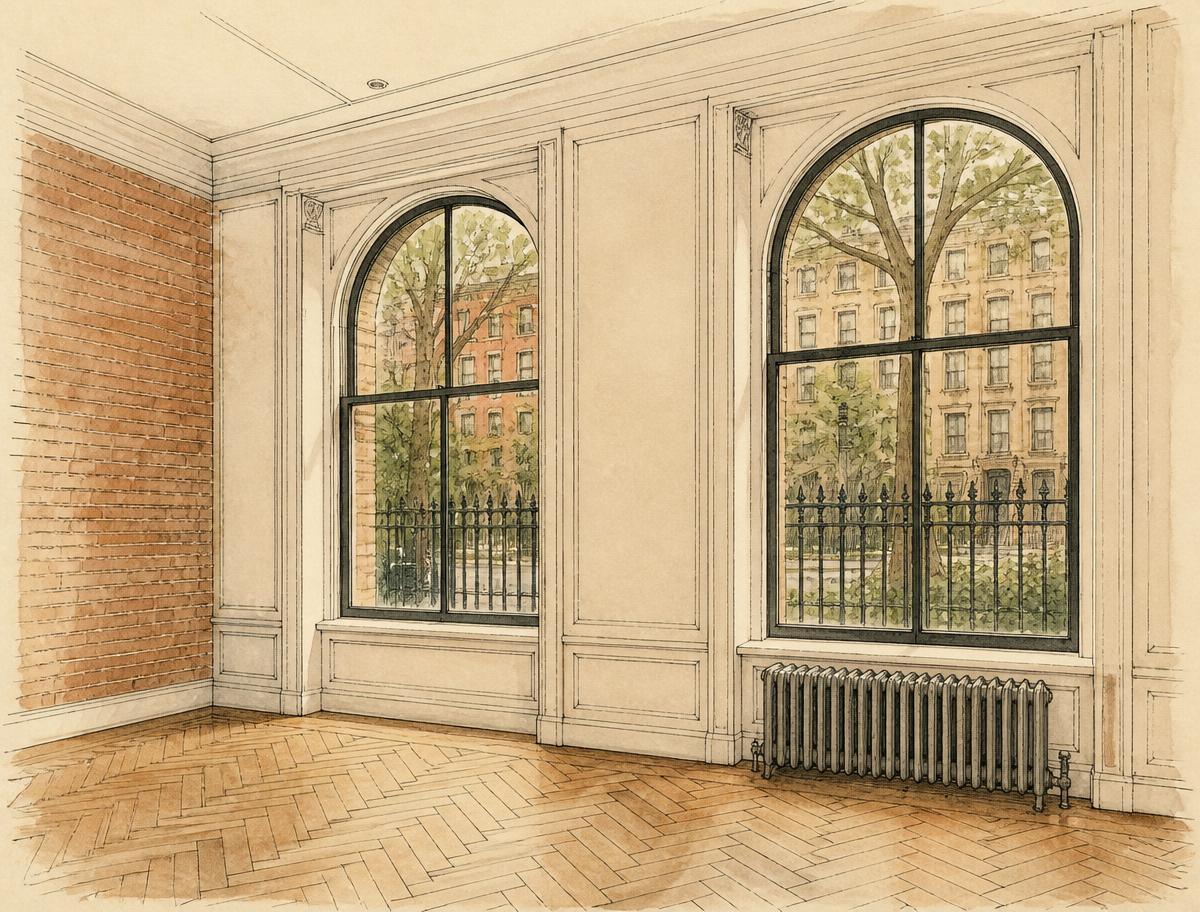
Seven questions.
That's the whole thing.
Under two minutes. No account, no login. A person reads every one.
How much room do you need?
Before you tour, hear what to look for.
Structure, submarkets, and the questions worth asking on a walkthrough — including the ones that decide whether a floor works for what you make.
Gramercy: Avenue Floors vs. Row-House Lofts
A two-host briefing on the neighborhood's two markets — about 37 minutes.
AI-narrated
Read the transcript
Host 1You know, when you map out a commercial real estate search in Manhattan, the grid system gives you this completely false sense of predictability.
Host 2Oh, absolutely. It's a very comfortable illusion.
Host 1Right. I mean, you look at a district, you see the avenues cutting north to south, the streets running east to west, and your brain just automatically applies this standard formula to everything.
Host 2Yeah, we're basically conditioned by modern commercial zoning to believe that a neighborhood is just this, you know, monolith.
Host 1Exactly. You drop a pin on a target neighborhood, calculate the square footage you need, and figure the rest is just, like, negotiating the lease terms.
Host 2Right. You think, okay, I am looking in Midtown, so I automatically get Midtown infrastructure. You look at the map from 5,000 feet up, and it all just reads as one cohesive market.
Host 1But the reality on the ground, especially when you step into the Gramercy District, that reality completely shatters that illusion.
Host 2It really does. It's wild. Depending on literally which way you turn your head at an intersection, you are staring at two completely different operational realities.
Host 1It is a genuine micro-market paradox, and that is exactly what we are unpacking today in this deep dive.
Host 2Yeah, and it's a crucial one to understand. We are pulling apart the underlying mechanics of Gramercy to help you find a commercial office loft, because this isn't just about picking an address you like.
Host 1Oh, not at all. Choosing a space here means choosing between two parallel universes, and those universes dictate how your business will actually function day to day. We're going to give you a shortcut to seeing the invisible lines drawn across this district before you ever even step foot on a property tour. Let's unpack this.
Host 2Well, what's fascinating here is how those invisible lines are absolute. I mean, they are rigid. We are talking about two distinct products separated by a distance you could cover in like a 30-second walk. It's that close.
Host 1Yeah, it is. On the avenues, you have the pre-war floors. On the side streets, you have the row house floors. And deciding which of those two structural realities your business belongs in that is the entirety of the search.
Host 2Yeah. Because if you get that wrong, honestly, the zip code doesn't matter.
Host 1Okay, I have to jump in here, because my immediate instinct, and I suspect the instinct of a lot of people listening who manage real estate portfolios, is to push back on that a bit.
Host 2Sure, yeah, go ahead.
Host 1Because with modern operations, you know, cloud computing, hybrid work models, physical location matters less than ever in terms of hard infrastructure.
Host 2I hear that a lot, yeah.
Host 1Right. Like, if I want my firm in Gramercy because the location works for my partner's commutes, why can't I just optimize for square footage and price? Why does stepping 50 feet off Park Avenue South onto a side street fundamentally alter my entire business model?
Host 2That is the big question, and it's because you aren't just changing your street view. You are stepping into a completely different century of structural engineering.
Host 1Oh, wow. A different century?
Host 2Literally. And different legal zoning, too. So let's look at product A, right? The pre-war avenue floor. When you lease a space on Park Avenue South or Third Avenue or Lexington Avenue, you're buying into purpose-built commercial machinery. Oh, these buildings were erected in the early 20th century explicitly to handle the physical weight and the operational flow of commerce.
Host 1Right, so they have the DNA of a corporate asset from day one.
Host 2Exactly. You have the heavy steel framing, the high-capacity freight elevators, passenger elevators.
Host 1The lobbies?
Host 2Yes, dedicated lobbies with actual building staff managing the influx of couriers, clients, employees, everything.
Host 1So it's standard. You're operating on a standard commercial lease with a professional landlord.
Host 2Spot on. The floors are open plates. You have structural columns spaced predictably, which allows you to build out, you know, a dense bullpen, run heavy IT infrastructure, manage high foot traffic. It behaves exactly the way you expect a modern workspace to behave.
Host 1Yes. It is predictable, it's scalable, and it's built to absorb the friction of a growing company.
Host 2It's essentially plug and play.
Host 1But then you take that 30-second walk, you turn off the avenue, you walk into the historic core of Gramercy, and you hit product B.
Host 2Product B. The row house floor.
Host 1The row house floor. And this is where the charm factor is just off the charts. But the operational reality takes a massive left turn.
Host 2A huge left turn. We are talking about the parlor level or the garden level or the upper floors of a 19th century townhouse that has been retrofitted for professional use.
Host 1Right. And the visual appeal, I mean, it's undeniable. You have 14-foot ceilings, you have original plaster moldings, wood-burning fireplaces.
Host 2It sounds gorgeous.
Host 1It is. But you have to remember, you are running a modern enterprise inside a residential footprint.
Host 2Ah. Okay, you do not have an open floor plate. You have a series of partitioned rooms, basically, what used to be a formal dining room, a library, a master bedroom.
Host 1Oh, I see. And your landlord is not a real estate investment trust. It is highly likely an individual or maybe a family trust that owns just this single structure. And crucially, you have residential neighbors sharing the building with you.
Host 2It is literally like trying to run a sleek, modern consultancy out of a period drama.
Host 1That is a perfect way to put it. But I want to really stick on this constraint issue for a second because I can hear people listening and thinking, well, I don't need an open bullpen. I like private offices. A partitioned row house floor sounds great for my boutique firm.
Host 2Sure, people say that all the time.
Host 1Right. So what are the actual physical breaking points that tenants completely underestimate here?
Host 2Well, the first breaking point is vertical logistics. We are so accustomed to elevators in Manhattan that we honestly forget how disruptive their absence is. Most of these row houses are walk-ups. Now, apply that to the mundane reality of running a business. Let's even forget about the initial move-in for a second.
Host 1Which I'm sure is its own nightmare.
Host 2Oh, it is. But just think about receiving a heavy-duty networked printer on a Tuesday afternoon.
Host 1Oh, man. Right. There is no freight car. There's no loading dock out back. Nothing. There is only a narrow, winding, 19th-century wooden staircase.
Host 2Ouch. So that printer delivery suddenly requires specialized labor. You have potential damage to historic wainscoting. And it's a massive disruption to your workday.
Host 1The delivery guys are cursing you.
Host 2Exactly. But honestly, the logistics pale in comparison to the human constraint, which is client accessibility.
Host 1This is the invisible barrier, isn't it? If you lease the third floor of a walk-up row house, you have to view every single step through the lens of your least mobile client, or frankly, your least mobile employee.
Host 2Yes, you have to. If you are running a high-end architectural firm or a specialized therapy practice, and a key client cannot physically manage two steep flights of stairs, you have actively designed a physical barrier right into your revenue stream.
Host 1Yeah, that is exactly what you've done. And you mentioned the physical constraints of a partition layout earlier.
Host 2Acoustics and the density limits too. These spaces were not designed for modern commercial density. If you try to squeeze a growing team of say 12 people into a space designed as a Victorian parlor, the acoustics become an absolute nightmare. Because it's all hard surfaces.
Host 1Right, hard plaster walls, high ceilings, wood floors, every phone call, every Zoom meeting just echoes through the whole space.
Host 2And the bathrooms, they're scaled for a single family residence, not a commercial team.
Host 1Right. Every single physical element of the space actively resists scale. So it's not just a matter of creatively arranging the desks, the building itself is literally telling you no. It's fighting you.
Host 2Which brings up a fascinating question for me. How did this hyper-localized divide even happen? I mean, Manhattan is constantly tearing itself down and rebuilding. Zoning usually blends over time. Why is the line between the commercial avenue and the residential side street in Gramercy so abrupt?
Host 1To understand the modern lease constraints of this district, you really have to look at its history purely as a mechanism of causation. The layout we are navigating today is the direct result of a legal masterstroke executed in the 1830s by a developer named Samuel Ruggles.
Host 2Here's where it gets really interesting, everyone. We have to go back 200 years just to understand why you can't get a freight elevator today.
Host 1So Ruggles buys the old Gramercy farm, which I read was essentially just a swamp, right?
Host 2Basically a swamp, yeah. He spends a fortune draining it. And then, instead of just carving it up into maximum density grid lots like everyone else was doing, he does something radically different. He creates a manufactured scarcity.
Host 1That was his genius. Ruggles carved out a private square at the center of the development, Gramercy Park. But the brilliance wasn't just planting trees, it was the legal structure he put in place.
Host 2Ah, the paperwork. Always the paperwork.
Host 1He sold the 66 surrounding lots with deeded perpetual rights to the park attached to them.
Host 2Okay, but let's pause right here and make a massive crucial clarification for anyone listening who is actively hunting for space. Because this is the biggest misconception about the district, isn't it?
Host 1Oh, without a doubt. If you are a commercial tenant leasing office space in one of these surrounding buildings today, you do not get a key to Gramercy Park. That is absolutely, let me repeat that for everyone, you do not get a key. The legal covenant restricts access strictly to residents of those original lots. As a commercial operator, you do not get park access.
Host 2Right, so don't sign a lease thinking you're going to eat lunch in the private park.
Host 1No, you'll be eating lunch looking through the iron fence. The reason we are discussing Ruggles' private park is solely to explain the zoning and the physical building stock that exists today.
Host 2Okay, so how did that covenant shape the buildings?
Host 1Well, that 1830s covenant created a fiercely protected master plan enclave of brick and brownstone row houses. Ruggles laid out the streets to deliberately discourage heavy traffic. He essentially entrenched a residential oasis. And that legal entrenchment acted like a fortress over the decades. Through the late 19th century, it remained this fashionable residential stronghold. Then, in the early 20th century, you get this massive wave of commercial development starting to push north from downtown.
Host 2Right. You get these huge pre-war commercial structures rising rapidly along the major arteries, Park Avenue South, 3rd Avenue, Lexington Avenue.
Host 1But that commercial wave hits an invisible legal wall. The row house core was too wealthy, it was too legally encumbered by those park covenants, and frankly, too politically connected to be demolished for office towers.
Host 2Wow! So, the commerce literally had to flow around it.
Host 1Like water flowing around a boulder in a river. The avenues built up into these dense commercial corridors, but the center remained perfectly preserved.
Host 2Exactly. And then, after the Second World War, the dynamic shifts again, right? The townhouses themselves begin converting from single-family mansions into multi-unit buildings and professional spaces.
Host 1Precisely. The original families kind of moved out or downsized, and the lower floors, the parlors, the garden levels were leased out for professional use.
Host 2And if we connect this to the bigger picture of your real estate search today, this historical timeline is the exact mechanism that created the two parallel markets.
Host 1Right, so that's why we have this crazy split.
Host 2Yes. You have the towering, purpose-built commercial machinery on the avenues sitting shoulder-to-shoulder with a protected, low-slung historic core. That is why the side street floors are small, it's why the district is so remarkably quiet, and why absolutely nothing large or scalable is ever available in the middle of Gramercy. It's literally history dictating the limits of your modern headcount.
Host 1I love that. So, armed with that understanding of the macro environment, we can divide Gramercy into three distinct sub-markets. It's not just about the architecture, it's about matching your business's operational DNA to the correct zone.
Host 2It really is a critical self-identification exercise for any tenant. You have to know what you are before you can know where you belong.
Host 1Let's break down sub-market one, the Park Avenue South Corridor. This is the heavyweight zone.
Host 2The heavyweight zone, for sure. This is the pre-war commercial stock we discussed earlier. You know, professional landlords, full floor plates, real elevators, standardized lease structures.
Host 1And who is moving in there?
Host 2The tenant profile here leans heavily into technology, media, advertising professional services, and large institutional non-profits.
Host 1Then why are they there?
Host 2Well, because if you are a tech startup that just raised a Series B or you're an agency pitching major brands, you need the infrastructure to support aggressive growth and high-volume operations.
Host 1You absolutely do. You need to be able to drop 50 new desks into a space without violating a fire code or, you know, destroying the acoustics. This corridor is really the only part of Gramercy that can functionally absorb a growing dynamic team.
Host 2Exactly. Now contrast that with sub-market two, the row house floors. This encompasses the historic core immediately surrounding the park and stretching south along Irving Place.
Host 1The boutique enclave. These are the converted parlors, the garden levels. Highly partitioned, mostly walk-ups, owned by individuals rather than institutions.
Host 2Yes. And the tenant profile shifts entirely here, doesn't it? You don't see scaling tech startups here. You see high-end therapists, boutique architectural firms, niche consultancies, specialized medical practices, and design studios.
Host 1And they choose this sub-market because the aesthetic environment is inextricably linked to their service. If you are a high-end therapist, the quiet, the privacy, the historic gravitas of a brownstone parlor floor, that is an asset to your practice. It's part of the product.
Host 2Exactly. Yeah. But it is strictly for small-scale, highly stable operations. If you plan to triple your revenue by tripling your headcount, Irving Place will physically break your business model. It just won't work.
Host 1Which brings us to sub-market...
Host 2Which kind of sits on the eastern and northern edges of the district, moving toward 3rd Avenue, 2nd Avenue, and up along East 23rd Street.
Host 1Right. I consider this the pragmatic fringe. The architecture changes significantly as you move away from that protected core. You encounter much plainer pre-war stock intermixed with mid-century utilitarian buildings. So you lose a bit of the charm. You lose the historical romance of Irving Place, then you lose the corporate polish of Park Avenue South. But you gain massive leverage on value. Significant value. The tenant profile here is heavily weighted toward clinical medical use, institutional footprints, and back office operations. It's where you go when margins matter more than moldings, essentially. You get a straightforward, functional floor plate at a highly logical price point. No tech brochure, no 19th century romance, just operations.
Host 2Very well said. So the exercise for the listener is clear. Are you the scaling tech firm on the avenue? The boutique consultancy in the historic core or the margin-focused operation on the eastern edge? And once you answer that, you have to actually go execute the search. You have to tour the spaces. And this is where assumptions will absolutely destroy a deal.
Host 1I bet. Touring a standard commercial glass box in Midtown is relatively foolproof. But touring a converted historical asset in Gramercy, that requires an entirely different checklist.
Host 2Let's start with the row house floors because these carry the highest operational risk if you don't know what to ask.
Host 1I completely agree. And I want to get really granular here because it's so easy to walk into a sunlit parlor floor, get blinded by the marble fireplaces, and completely miss the structural liabilities.
Host 2Oh, it happens every day. So let's go back to vertical logistics. We know it's a walk-up, but as a tenant, I can't just nod and say, okay, we'll take the stairs. What is the specific mechanical calculation I actually need to be making?
Host 1You have to measure the geometry of the access. It is not just about the number of flights. It is about the width and the turn radius of a 19th century staircase.
Host 2Ah, the turn radius.
Host 1Yes. If that stairwell has a tight, narrow 90-degree turn, your standard 8-foot conference table is not getting up there. Period. The physics just won't allow it.
Host 2Exactly. And your alternative is removing a front window and hiring a hoisting company to crane it in from the street.
Host 1Oh, my God. Which requires city permits, thousands of dollars, and a landlord who is actually willing to let you dismantle the facade of their historic building, which they often aren't.
Host 2Right, why would they?
Host 1So you must measure your largest piece of equipment against the narrowest point of the stairwell before you even consider lease terms.
Host 2That is a phenomenal point, and it bridges perfectly into the legal risks. Let's talk about the Certificate of Occupancy, the CFO. Anyone listening to this who handles commercial real estate knows you need a valid CFO. That's basic.
Host 1Very basic. But in Gramercy, the mismatch between what a landlord calls a space and what the city permits is incredibly dangerous, isn't it?
Host 2This raises an important question and a critical vulnerability. Because these row houses were originally residential, their transition to commercial use over the decades was often done very piecemeal.
Host 1Kind of under the radar.
Host 2Sometimes, yes. You might tour a stunning garden level. The listing broker calls it an office. The landlord has leased it as an office for the last 10 years. But when you pull the CFO, the city's legally permitted use might explicitly state residential accessory use. Or it might be zoned strictly for a medical practitioner, but not for a general consultancy or an advertising agency.
Host 1And if I sign a lease without checking that specific nuance, what happens?
Host 2You are operating in breach of city zoning. The immediate consequence is that you will likely be denied business insurance because underwriters will absolutely check the CFO.
Host 1So you're naked.
Host 2Completely. If there is a fire or a client trips and falls, you have zero coverage. Furthermore, you risk an abrupt eviction notice from the Department of Buildings, regardless of what your lease says. You cannot rely on the broker's marketing copy in a historic row house. You must independently verify the exact permitted use class on the paperwork.
Host 1That is sobering. It's a completely unforced error that could end a business.
Host 2Another major variable that you just don't encounter in standard office towers, the residential factor. The reality that you are likely sharing a small building with people who actually live, sleep, and eat there.
Host 1Having a residential tenant above or below your office completely dictates your operational schedule. You have to ask the managing agent exactly who else occupies the building. Because their right to quiet enjoyment supersedes your right to run a late night pitch meeting.
Host 2Precisely. If you are an agency that routinely orders dinner at 8 p.m. and grinds until midnight with music playing, a row house floor will be a total disaster. The residential neighbors will file noise complaints, which the landlord will treat as a lease violation. It's just not a fit.
Host 1It also governs your physical access. Many of these single owner buildings enforce strict move-in and delivery hours, sometimes restricting you to a tight four-hour window on a weekday afternoon, just so you don't disturb the residents. Your business has to bend to the rhythm of a home.
Host 2That is wild. Let's talk about the physical plant HVAC and plumbing, because again, in a modern commercial space, you don't even think about this. The building engineer handles it. But in a converted townhouse, the infrastructure is decentralized.
Host 1In a row house, you're frequently dealing with decentralized window units or localized split systems for heating and cooling. The crucial question is, who is responsible for maintenance and replacement?
Host 2Oh, I bet I know the answer.
Host 1Yeah, because very often in these boutique leases, the burden falls entirely on the tenant. If the compressor blows in the middle of a July heat wave, there's no building superintendent to call. You are sourcing the contractor, you are paying for the repair, and your team is sweating until it's fixed.
Host 2And the plumbing setup can be just as quirky, right? You might be paying a premium for a beautiful space, only to realize the bathroom isn't even internal to your suite. It's out in the public hallway, and you are sharing it with the residential tenant on your floor.
Host 1Exactly. It completely breaks the illusion of a premium, self-contained corporate environment.
Host 2Speaking of illusions, we have to discuss the light illusion. I love this concept. Walk through the mechanism of why a space can look amazing on a tour, but be miserable to work in.
Host 1It comes down to the architecture of a 19th century lot. A row house is a long, deep rectangle. It shares solid, windowless brick party walls with the buildings immediately to its left and right.
Host 2Right, because they're row houses.
Host 1Exactly. Therefore, it only receives natural light from two narrow exposure points. The front facade facing the street, and the rear facade facing the garden. The entire middle of that floor plate is structurally starved of natural light.
Host 2So if you tour the space at 2:00 p.m. on a clear day... The sun might be perfectly angled to hit the rear garden, bouncing...
Host 1Brilliant light deep into the space, it feels airy, warm, and highly desirable. But because of the surrounding building heights and the narrow lot geometry, that direct sun exposure might only last for a two-hour window. By 4.0 p.m. or in the early morning, that exact same space can feel cavernous and depressingly dark. You cannot judge a row house floor plate based on a single 20-minute afternoon tour. You have to verify the natural light retention at different times of the day.
Host 2Okay, so the historic core is a minefield of logistical and structural quirks. But let's pivot to the avenues. The pre-war commercial buildings on Park Avenue South, these are propousine offices, the zoning is clear, the elevators work. Are these a straightforward transaction or do they have their own specific traps?
Host 1They are far more standardized, yes. But they utilize specific commercial mechanisms that can drastically inflate your operating costs if you aren't paying attention. And the most critical is scheduled HVAC.
Host 2Right, contrasting with the tenant-controlled window units in the row houses. On the avenues, you are tying into a centralized building system. The standard mechanism is that the landlord provides heating and cooling during standard business hours, typically 8.0 a.m. to 6.0 p.m., Monday through Friday.
Host 1Which sounds fine until you realize you run a tech firm that operates on a completely different rhythm, or an accounting firm during tax season where Saturday work is absolutely mandatory.
Host 2Exactly. If you need HVAC outside of those standard hours, you must request it, and you will be charged an hourly overtime rate.
Host 1And I'm guessing it's not cheap.
Host 2Oh, those rates are not trivial, they can be exorbitant. The trap is signing the lease without explicitly negotiating or even confirming the exact overtime HVAC rate. If your operational model requires frequent night and weekend work, those hidden overtime charges can completely decimate your real estate budget.
Host 1Man, that's huge. Then there is the actual calculation of the space you're leasing, the loss factor. Again, anyone in commercial real estate understands the difference between rentable square footage, what you pay for, and usable square footage, the actual carpet you can put desks on. You're always paying for a percentage of the common areas. But why is the loss factor uniquely problematic in Gramercy's pre-war avenue buildings?
Host 2Because of the vintage of the engineering. In a modern glass tower, the core is incredibly tight and efficient. In a pre-war building on Park Avenue South, you have massive over-engineered structural columns, you have wide, inefficient corridors, oversized elevator shafts, and thicker exterior walls.
Host 1So it just eats up space.
Host 2Yes. The common areas consume a much larger percentage of the building's gross footprint. Therefore, the loss factor, the delta between what you pay for and what you actually get to use, can be significantly higher than in a more modern district. You cannot just compare the rentable square footage price of a Gramercy pre-war against a midtown modern. You have to calculate the cost per usable square foot to get an accurate financial picture.
Host 1That is a crucial distinction. Now, here's a warning that feels almost comically specific to the edges of Gramercy, where the avenue buildings awkwardly about the historic core. The trap of contiguous space. If a broker tells me they have 4,000 contiguous square feet available, I am picturing one massive, sweeping floorplate. And in most districts, you would be right. But because of how these buildings were joined, expanded, and retrofitted over the last century, contiguous in Gramercy can be a highly technical legal definition rather than a functional reality.
Host 2Oh no. You must physically walk the space. Because contiguous might literally mean two completely separate rooms. Sitting on two slightly different elevations, connected by a narrow internal fire stair.
Host 1You're kidding?
Host 2I wish I was. Technically, the spaces touch. Legally, they are contiguous. Functionally, it completely fragments your team and destroys the operational flow you thought you were leasing. And finally, there is a vanity constraint that actually impacts business operations. Signage. This is paramount, especially if you have a client-facing business. You cannot assume you have the right to place a plaque by the door or mount a logo visible from the street.
Host 1Because of the history.
Host 2Yes. The historic preservation rules in the row house core are draconian, and even many of the avenue buildings have strict facade covenants. If your business model relies on street-level visibility or prestige branding on the exterior, you must confirm the signage rights in writing before you sign. Otherwise, your business might be entirely invisible to the public.
Host 1So what does this all mean? We've mapped the history, we've broken down the submarkets, and we've navigated the tour checklists. But I want to land on what I consider the most valuable part of any deep dive. The honest objections. Because every broker wants to sell you on why a neighborhood is perfect. We need to define exactly who Gramercy is completely wrong for.
Host 2Let's start with the most glaring objection. The scale problem. The absolute lack of scalable inventory. We touched on this, but we need to look at the hard mathematics of it. There is very little large, contiguous, usable space anywhere in this district, and effectively zero in the historic row house core.
Host 1Let's run a scenario. I have a specialized consultancy with a team of 10 people.
Host 2A team of 10 fits beautifully. You can take a gorgeous parlor floor on Irving Place, or a boutique pre-war suite on Park Avenue South. It feels intimate, the scale is perfect, the aesthetic enhances your brand.
Host 1But what if I am a successful tech startup? We just secured funding, we have 40 employees, and we plan to hire 20 more by the end of the year. Can I just lease multiple floors in a row house, or take a larger block on the avenue?
Host 2It is functionally impossible in the row houses, and incredibly inefficient on the avenues. Finding a single floor plate in Gramercy that can elegantly handle 40-plus employees with modern IT and meeting room requirements is a massive challenge. Finding multi-floor availability in these tightly held buildings is rare.
Host 1So you're stuck.
Host 2The strategic warning is about trajectory. If your team is 10 people today, but your board mandate is to double in size over the next 36 months, you should not sign a standard five-year lease in Gramercy.
Host 1Because when we hit 25 people, I won't be able to just knock down a wall or take the adjacent suite. The inventory doesn't exist.
Host 2Exactly. You will be forced to relocate, not expand. Which means you are absorbing the massive capital destruction of breaking a commercial lease, running dual offices during the transition, funding an entirely new build-out, and paying relocation costs, all because you chose a micro-market that cannot absorb growth. Gramercy is for stable headcounts, not aggressive scaling.
Host 1The second major operational objection is the geography of transit. Gramercy is often described in real estate circles as a transit desert, which sounds absurd if you are looking at a map of central Manhattan because there are subways everywhere. But when you look closely at how the lines are drawn, Gramercy sits in the void between them. It is a geographical reality that severely impacts daily operations. The district is nestled
Host 2...between major subway arteries. Now, the western edge is highly functional. If you are leasing on Park Avenue South, you are a short walk to the massive transit hub at Union Square, and you have the local Lexington Avenue line right at East 23rd Street. But the neighborhood stretches far to the east, and the further east you go toward Second Avenue, toward First Avenue, the more that commute becomes a genuine endurance test. Think about the daily physical reality for your employees. In October, on a brisk, sunny day, a fifteen-minute walk from Union Square to a brownstone near Second Avenue is a lovely stroll. But in a freezing February downpour, or during the 95-degree humidity of July, that fifteen-minute eastward trudge from the subway is brutal. And you cannot ignore the impact that has on your business. Your staff will arrive exhausted or frustrated. It impacts daily morale. It impacts employee retention. Furthermore, it impacts client perception.
Host 1That's a great point. If you are asking a high-net-worth client to walk fifteen minutes through slush to reach your office, you are creating friction before the meeting even begins. You are demanding a physical commitment just to access your services. So, if there is virtually no room to grow, and half the neighborhood requires a miserable commute in bad weather, we have to ask the obvious question. Why is this real estate still so fiercely coveted? Why do stable, high-end firms fight tooth and nail for these spaces?
Host 2Because the trade-off is entirely unique in Manhattan. What Gramercy demands in logistical compromise, it pays back in environmental quality. It offers a profound level of quiet that simply does not exist in any other central Manhattan business district.
Host 1It's that 1830s Ruggles effect still paying dividends today.
Host 2Precisely. You are situated in the geographic center of one of the most hyper-kinetic cities on the planet, yet on those historic side streets, the ambient noise drops to near zero. You get incredibly handsome, architecturally significant buildings that project a level of permanence, stability, and taste that a glass box in Hudson Yards can never replicate.
Host 1And it's not like you are exiled to the suburbs. You have the absolute best of both worlds just blocks away. You have the world-class restaurants, the retail energy, and the dynamism of the Flatiron District and Union Square within a five-minute walk. But you don't have to base your daily operations inside their chaotic congestion. You get the proximity to the heavy commercial amenities without the burden of the noise and the crowds.
Host 2So to crystallize the final verdict, who is the perfect tenant for Gramercy?
Host 1The ideal tenant is a small, structurally stable, client-facing enterprise, a boutique wealth management firm, a specialized clinical practice, a high-end design or architectural studio, any operation where the aesthetic environment, the quiet, and the historical gravitas are actual components of the product or service you are delivering to your client.
Host 2And conversely, who should absolutely cross Gramercy off their list right now?
Host 1Any business whose core operational model requires aggressive, unpredictable headcount growth, any company that relies on street-level brand visibility or walk-in traffic, and any firm whose workforce or clientele demands a subway entrance within a one-block radius. If you require scalability and extreme transit density, you need to pivot your search immediately to the Flatiron District or the Garment District. They are engineered to serve that exact model. Gramercy is not.
Host 2Okay, we have drawn the lines. We understand the two parallel universes, the Avenue Machine and the Row House Drama. We know the history, the submarkets, and the fatal traps on the tour. But there is one final piece of intelligence here that fundamentally changes how you acquire a space. These two halves of Gramercy don't just look and function differently, they actually transact in completely different ecosystems. This is the final and perhaps most important strategic insight for a tenant. You have to understand how to navigate the hidden market. Let's look at the Avenue buildings, Park Avenue South, 3rd Avenue. These are institutional assets. They are listed and brokered through conventional channels.
Host 1Right, they operate in the light. If I call any commercial brokerage firm in the city, they can instantly pull up the standard real estate databases, show me exactly what floor plates are available on Park Avenue South, what the asking price is, and who the landlord is. Everything is hyper-visible and highly liquid.
Host 2But the Row House floors, the historic core that so many boutique firms covet, operate as an almost entirely invisible market.
Host 1This fascinates me. How does an invisible market sustain itself in modern Manhattan real estate?
Host 2It comes down to ownership structure and scale. Remember, these historic townhouses are not owned by massive corporations with dedicated, aggressive leasing departments. They are single building assets, often held by families for generations, and run by small, local managing agents.
Host 1Oh, I see. These owners do not spend money on massive marketing campaigns. They do not blast glossy listings out to the global brokerage community. So how do the spaces lease?
Host 2They turn over incredibly quietly, and the entire mechanism relies on perfect timing. These spaces are rarely filled by a tenant who saw a public advertisement. They are filled by the person who happened to be talking to the right managing agent at the exact moment a vacancy occurred.
Host 1It's pure serendipity masquerading as a market. The current therapist gives their 60-day notice on a Tuesday. You happen to inquire with the managing agent on a Wednesday. You tour it on Thursday, and you sign the lease on Friday. The space is absorbed before it ever officially hits a database.
Host 2Exactly. If a stunning parlor floor on Irving Place actually makes it onto a public listing site, it usually means there's something structurally wrong with it, or it is wildly overpriced. The good inventory never sees the light of day.
Host 1So if I am the listener, and I have done the math, I know my headcount is stable, I know I want the gravitas of the historic core, and I desperately want to secure one of these townhouse floors, what is my actual strategic move? How do I penetrate this invisible market?
Host 2You have to bypass the standard databases and get yourself onto the short list of the people who actually control the inventory. Being a known entity to the specific agents who walk these historic buildings daily is the entire game, and there is a specific mechanism designed to facilitate exactly that.
Host 1Right. There's a short, highly targeted seven-question form on the site designed specifically to help you find your ideal commercial office loft. And the elegance of this mechanism is its lack of friction. There is no account creation. You do not have to generate a login or a password. You are not subscribing to a generic newsletter or entering a corporate funnel. You simply answer seven precise questions about your operational needs, your timeline, and your footprint.
Host 2And then a real human being, someone who physically walks the Gramercy District, who knows the single building owners, and who has direct lines to the local managing agents, reviews your criteria. They match your specific operational DNA to the quiet inventory that is turning over in the shadows. They become your timing mechanism. They bridge the gap.
Host 1And your business needs and the invisible market. Which brings us full circle to where we started this conversation. We talked about the danger of looking at a map and assuming a city is just a flat, highly legible spreadsheet. The reality on the ground in a micro market like Gramercy is deeply fractured, historically complex, and utterly unforgiving if you make the wrong assumption. But if you understand the mechanics, it is also incredibly rewarding.
Host 2It leaves you with a lingering philosophical thought about how business actually gets done. We live in an era where absolutely every square inch of the globe seems digitized. Everything is tracked, hypervisible, publicly listed, and perfectly optimized by algorithms.
Host 1But not this. No, not this. Isn't it fascinating that some of the most coveted, beautiful, and strategically valuable real estate in the very heart of Manhattan still operates entirely in the shadows? It actively resists digitization. It still relies on quiet handshakes, deep local knowledge, perfect timing, and simply knowing who to ask.
Host 2It really makes you wonder, as you look at the infrastructure of your own business, what other crucial, high leverage assets in your life are hiding in plain sight, just waiting for you to ask the exact right question at the exact right time.
Host 1It is a profound question to walk away with, and a reminder that the most valuable things are rarely listed on a database. You have the map, you know the history, and now you know exactly where the invisible lines are drawn. If you are looking for that commercial office loft, you know what to do. Good luck out there.
Fourteenth up to Twenty-third, Park Avenue South across to Third — brownstone blocks and small prewar buildings arranged around the only park in the city you need a key to get into.
Union Square at one end, Grand Central at the other.
Midtown South connectivity without Midtown South rents. For a team spread across Brooklyn, Queens and New Jersey, this is one of the easiest addresses in the city to reach.
- 23 St
- 28 St
- 33 St
- Union Sq–14 St
Park Avenue South at the door, and the fastest route to Grand Central and downtown.
- 23 St
- 28 St
- Union Sq–14 St
Two blocks west, and the direct run to Times Square, Herald Square and Lower Manhattan.
- 3 Av
- 1 Av
- Union Sq–14 St
The reason a Gramercy office works for a team living in Williamsburg or Bushwick.
- Union Sq–14 St
Union Square is a five-line hub at the southern edge — the practical reason this neighborhood commutes well from everywhere.
- 23 St crosstown
- First Av
- Third Av
- Park Av S
The M23 crosstown is quicker than the subway for anything river to river.
Worth checking on a tour: the walk from Union Square to the northern end of the neighborhood is longer than the map suggests. Which avenue your building sits on matters more here than which line you take.
A drained swamp that became the city's only locked garden.
1831 → today
Ruggles drains the swamp
Samuel B. Ruggles buys the old Gramercy Farm — the name comes down from a Dutch description of a crooked little swamp — drains it, lays out a private park with sixty-six building lots around it, and deeds the park to whoever buys the lots. The keys people still carry date from that arrangement.
The brownstone blocks
Greek Revival and Italianate row houses fill in around the park and down Irving Place, and the neighborhood becomes one of the most desirable addresses in the city. Pete's Tavern opens on Irving Place in 1864 and has been trading more or less continuously ever since.
Clubs, studios and writers
Samuel Tilden's house on Gramercy Park South gets a new facade from Calvert Vaux and becomes the National Arts Club; Edwin Booth's house next door becomes The Players in 1888. The association between these blocks and artists and writers starts here — a century before anyone called anything a loft.
The edges go commercial
34 Gramercy Park East goes up as one of the city's earliest cooperative apartment houses with an elevator. At the same time Union Square and the Ladies' Mile push east, and the row houses along the avenues start giving way to commercial buildings. The neighborhood splits in two, and it has stayed split.
The working floors
Prewar loft and office buildings fill Park Avenue South, Third Avenue and the East 20s side streets — printers, publishers, medical practices and small manufacturers. Eight- to nine-thousand-foot floors, high ceilings, moldings, decent light. Those are the floors we lease. The interior blocks around the park stayed residential and still are.
Landmarked early
The Gramercy Park Historic District is designated in 1966, among the first in the city, and extended in 1988. It covers the blocks immediately around the park rather than the commercial avenues — which is exactly why the interior looks untouched and the edges have been free to change.
Schools arrive
Baruch College builds up along Lexington and the School of Visual Arts takes buildings on East 23rd and through the East 20s. That brings a steady academic and creative tenancy to the northern edge that has nothing to do with the loft districts to the west, and it is a large part of who you'll be sharing a building with.
The value side of Midtown South
Gramercy still asks less per foot than Flatiron, SoHo, Chelsea or Tribeca for comparable prewar space, and it's the only one of them where you can put a team on a genuinely quiet block. The trade is that there is less of it: smaller floors, fewer buildings, and a market that rewards knowing the owners rather than watching the listings.
Who you'd be sharing the block with.
- Architecture and design practices off Irving Place
- Boutique consultancies in the brownstone floors
- Marketing and PR offices on Park Avenue South
- Small law and accounting firms on Third Ave
- School of Visual Arts on East 23rd
- Baruch College along Lexington
- Publishers and editorial offices on Park Avenue South
- Nonprofit and academic offices near the park
- Medical and dental practices in the prewar buildings
- Clinical and therapy offices off Gramercy Park
- Studios and physical therapy on Third Ave
- Specialist practices toward First Ave
- The National Arts Club (Gramercy Park South)
- The Players (Gramercy Park South)
- Theodore Roosevelt Birthplace (East 20th St)
- Irving Plaza (East 15th St)
- Pete's Tavern (Irving Place)
- Restaurants along Irving and East 18th
- Union Square Greenmarket, two blocks southwest
- Cafés on Third Ave and Park Avenue South
- The private park, and the keys
- Brownstone stoops and garden-level entrances
- Stuyvesant Square to the east
- Union Square at the southwest corner
Why bother
The best floors are gone before they're listed. Character space moves through people, not portals — so we do it the other way around. You tell us what you'd love. We keep an eye out.
You told us what you need. That's where it ends.
No newsletter, no CRM queue, no "just checking in." A person reads your brief and reaches out directly when a floor's worth showing you.
- 01
We never sell, share or rent your brief — not to landlords, not to other brokers, not to a data company.
- 02
No newsletters or mass blasts. When we get in touch, it's a direct email or text about a specific space.
- 03
A person reads it. Not a bot, not a queue in some CRM.
- 04
Tell us to stop and we stop. Simple as that.
The Definitive Guide to Gramercy Office Lofts
The park blocks versus the avenue edges, what a brownstone floor is actually like, and why it asks less than Flatiron.
Gramercy not quite it?
We work the surrounding neighborhoods too. Mention it in the brief.
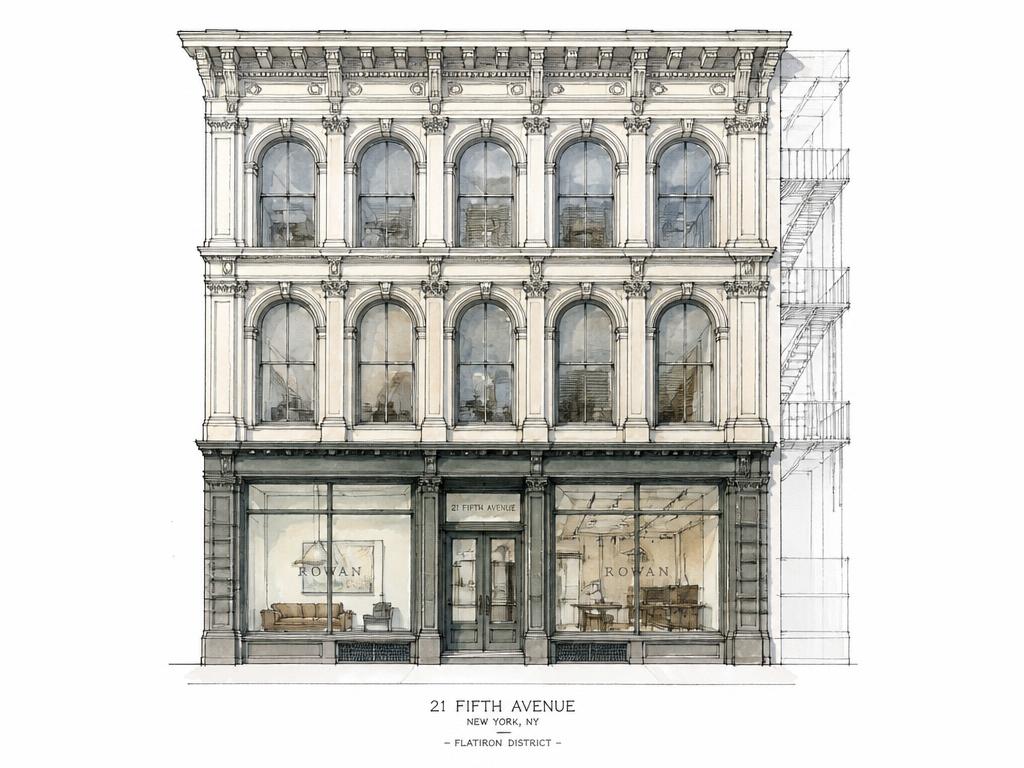
Directly west across Park Avenue South: big store-and-loft buildings put up to show and sell goods, with wide showroom floors and better light than Gramercy's plainer prewar stock.
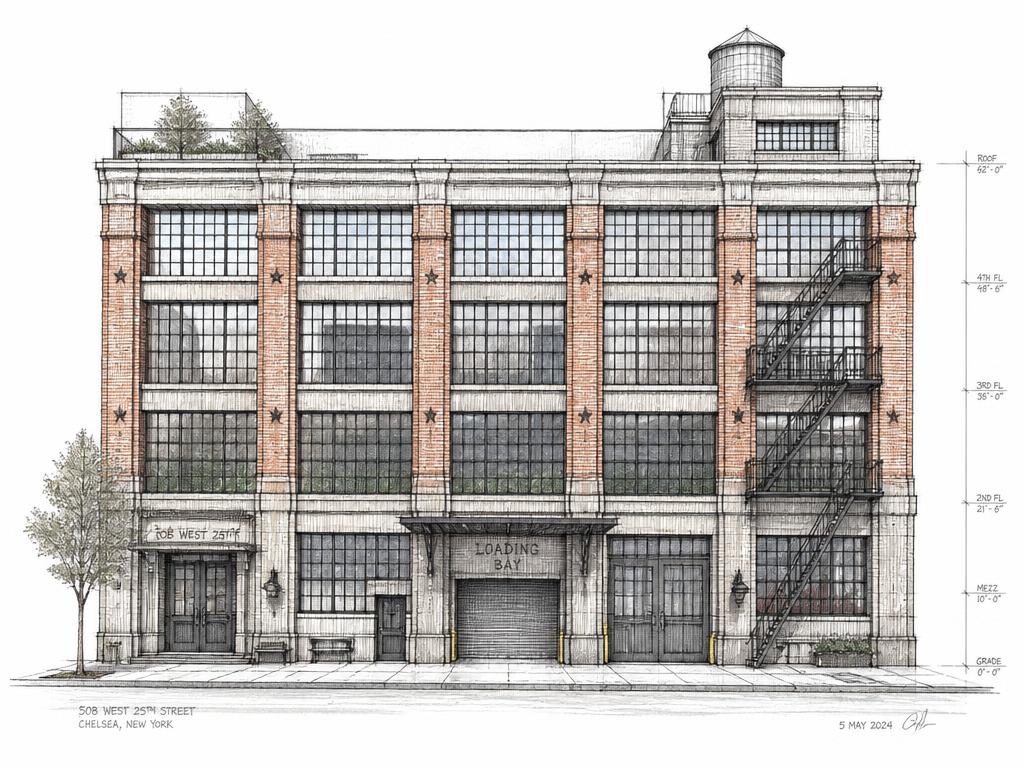
Loft and warehouse buildings on a larger grid, with deeper floor plates and real freight where Gramercy's buildings run to passenger service and smaller floors.
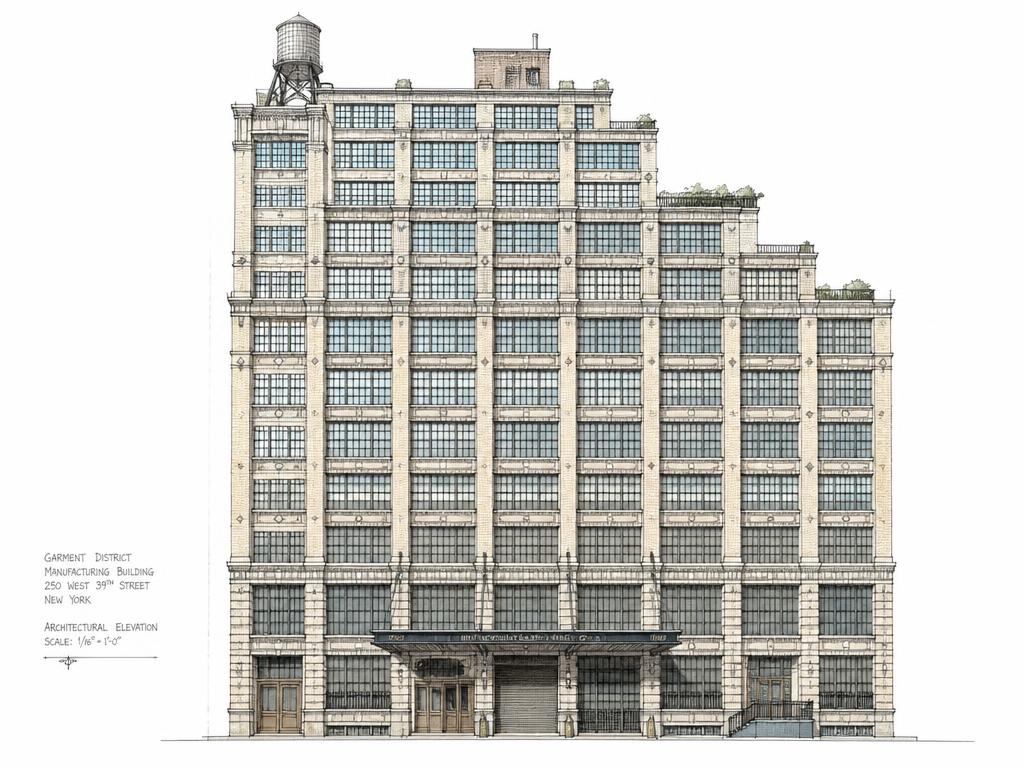
Tall loft buildings built for making and shipping clothing — freight elevators, high ceilings and busy lobbies, a working contrast to Gramercy's quiet residential-scaled blocks.
What people ask before they take a loft in Gramercy.
01What counts as a 'creative office loft' in Gramercy?
02How much does office space in Gramercy cost?
03What's the smallest space I can rent in Gramercy?
04How do I get to Gramercy?
05Can I run a studio or light production here?
06What does the historic district mean for my build-out?
07What's the difference between the park blocks and the avenue edges?
08How is Gramercy different from Flatiron?
09What are the classic Gramercy buildings?
10Do you actually have off-market listings?
Got one we didn't cover? Put it in the brief above, or call 646-291-2018.
The words that decide what you're signing.
Every term that turns up on a tour, in a floor plan or in a lease — what it means, why it costs you, and how it behaves in this neighborhood specifically.
- Gramercy Park key
A physical key giving access to the private, locked park at the center of the neighborhood — issued only to owners of property immediately facing the park, not to the general public or most nearby tenants.
Why it mattersIt's a genuine amenity for the handful of buildings that qualify, and a real source of confusion for everyone else — most Gramercy office space, including nearly all of what we lease, does not come with one.
In GramercyThe arrangement dates to 1831, when Samuel Ruggles drained the old swamp, laid out the park, and deeded it to the surrounding lot owners rather than the city. If key access matters to you, confirm it in writing — a building 'near the park' is not the same as a building with a key.
- Gramercy Park Historic District
A landmarked district, designated in 1966 and extended in 1988, covering the blocks immediately around Gramercy Park — but not the commercial avenues on either side.
Why it mattersWhether your building is inside it changes your renovation timeline materially, and the district's boundary is narrower than most people assume, since it stops at the avenues.
In GramercyPark Avenue South and Third Avenue, where most of the leasable prewar floors actually are, sit largely outside the district. Confirm which side of the line your building falls on before assuming a Landmarks review applies to your build-out.
- Prewar office building
A commercial building from roughly 1900–1935, built with real office and light-industrial floors — moldings, tall windows, masonry-and-steel construction — as opposed to a residential brownstone or a warehouse conversion.
Why it mattersIt's the actual leasable stock in Gramercy, distinct from both the loft buildings further west and the residential row houses around the park.
In GramercyThis is what fills Park Avenue South, Third Avenue and the East 20s side streets — floors commonly 8,000 to 9,000 square feet, ceilings 11 to 13 feet, decent light, and none of the freight or raw industrial character you'd find in Chelsea or Tribeca.
- Brownstone conversion
A commercial floor carved out of a residential row house — a parlour or garden level fitted out for office use rather than living space.
Why it mattersIt's a genuinely different product from a prewar office floor: small, quiet, often idiosyncratic in layout, and usually the only way to get commercial space directly on or near the park.
In GramercyThis end of the market barely exists in Tribeca or SoHo, but it's real in Gramercy — small suites from roughly 500 to 1,500 square feet turn up regularly in the brownstone blocks. Expect stairs, older systems, and a residential context with genuinely protective neighbors.
- Parlour floor
The main entertaining level of a row house, one flight above the street — historically the most formal rooms in the house, with the tallest ceilings and largest windows in the building.
Why it mattersIn a brownstone conversion, it's usually the most desirable floor to lease — best light, best proportions — and priced accordingly.
In GramercyWorth asking specifically which floor of a Gramercy brownstone you're being shown. A parlour floor and a garden floor in the same building can be very different spaces at very different rents.
- Garden-level entrance
A separate entrance below the main stoop, at or near grade, typically leading to the ground and basement floors of a row house.
Why it mattersIt gives a ground-floor or lower-level tenant their own door, independent of the building's main entrance — useful for client-facing work, though it's a less formal address than the parlour floor above.
In GramercyCommon throughout Gramercy's brownstone blocks. A garden-level suite is usually the most affordable option in a row house, with the tradeoff of lower ceilings and less light than the floors above.
- Passenger elevator
A standard people-carrying elevator, as distinct from a freight elevator built for moving goods and equipment.
Why it mattersIt tells you what a building was built to do — and in Gramercy's case, that it wasn't built for heavy move-ins, deliveries or industrial use.
In GramercyGramercy's prewar office stock runs almost entirely to passenger service rather than the real freight you'd find in Chelsea or Garment District buildings. Confirm delivery and move-in logistics before assuming a building can handle anything heavier than office furniture.
- Floor plate
The size and shape of a building's usable floor area on a given level.
Why it mattersIt determines how many people or workstations a floor can actually hold, and whether a layout works at all — a square-footage number alone doesn't tell you the shape.
In GramercyGramercy's prewar avenue buildings run fairly consistent full floors around 8,000 to 9,000 square feet — smaller than Flatiron's comparable stock. The brownstone floors are far smaller still, and the awkward middle band, roughly 3,000 to 6,000 square feet, is genuinely hard to find here.
- Clear-to-deck
The distance from finished floor to the underside of the structure above — the true ceiling height, before ductwork, sprinklers or lighting take their share.
Why it mattersListings quote the highest number in the room; retrofitted mechanical runs can eat two or three feet of it.
In GramercyGramercy's prewar office floors generally run 11 to 13 feet clear — plainer and a bit lower than Flatiron's comparable stock, though the moldings and proportions of the older buildings often make a floor feel taller than the number suggests.
- Loss factor
The percentage difference between a floor's rentable square footage — what you're billed for — and its usable square footage — what you can actually put desks in.
Why it mattersIt's one of the first numbers worth asking for, since two floors quoted at the same rent per square foot can cost meaningfully different amounts once it's applied.
In GramercyWorth confirming directly when comparing a prewar avenue floor to a brownstone conversion — the two building types calculate common space very differently, and it's a genuine part of why Gramercy prices below Flatiron for comparable space.
- Base building HVAC
Cooling and heating provided by the landlord as part of the building's core systems on a fixed schedule, as opposed to a tenant-controlled or supplemental system paid for separately.
Why it mattersIt decides whether working outside standard hours costs extra, and how much control a tenant has over their own floor's temperature.
In GramercyWorth confirming directly — Gramercy's prewar buildings vary a lot in how their systems were upgraded, and the brownstone conversions in particular sometimes rely on older, less flexible equipment than the avenue buildings.
- Certificate of appropriateness
The approval the NYC Landmarks Preservation Commission issues before exterior work can proceed on a landmarked building — required for anything visible from the street.
Why it mattersIt adds real time to a schedule, not just cost, so it needs to sit in your build-out timeline from the start if it applies to you.
In GramercyOnly relevant if your building is actually inside the Gramercy Park Historic District, which covers the park blocks rather than the avenues. Confirm which side of that line your building sits on before assuming this applies.
- Decorative moldings
Applied plaster or wood ornamentation around ceilings, doorways and windows — cornices, picture rails, door surrounds — common in buildings from the late 19th and early 20th centuries.
Why it mattersThey're original character that's expensive to replicate and easy to damage, so most landlords and lease riders will specify what a tenant can and can't alter.
In GramercyA real part of the appeal of Gramercy's prewar office floors and brownstone conversions alike — genuinely decorative detail the plainer store-and-loft stock further west mostly doesn't have. Ask what's protected before you plan a build-out around or through it.
- Elevator co-op
A cooperative apartment building where residents own shares in the corporation that owns the building, rather than owning their unit outright — an ownership structure distinct from a condo or a rental building.
Why it mattersIt's a residential ownership type, not typically relevant to a commercial tenant directly — but it signals the kind of building stock and neighborhood context you're in.
In Gramercy34 Gramercy Park East, built in 1883, was one of the city's earliest examples — a marker of how early this neighborhood's residential character solidified around the park, well before any of the commercial avenue buildings went up.
You know what to ask now. Tell us what you're after.
Seven questions, no account, nothing to download. A person reads every one — and comes back with floors that match, including the ones that never reach a listing site.
Written from buildings we've actually walked. If something here is wrong, or a term is missing, tell us — we'd rather fix it than have it repeated back to us on a tour.
Got a loft
building here?
We probably know a tenant for it. Quietly.
Let's talk→